


India as a Manufacturing Partner to the World


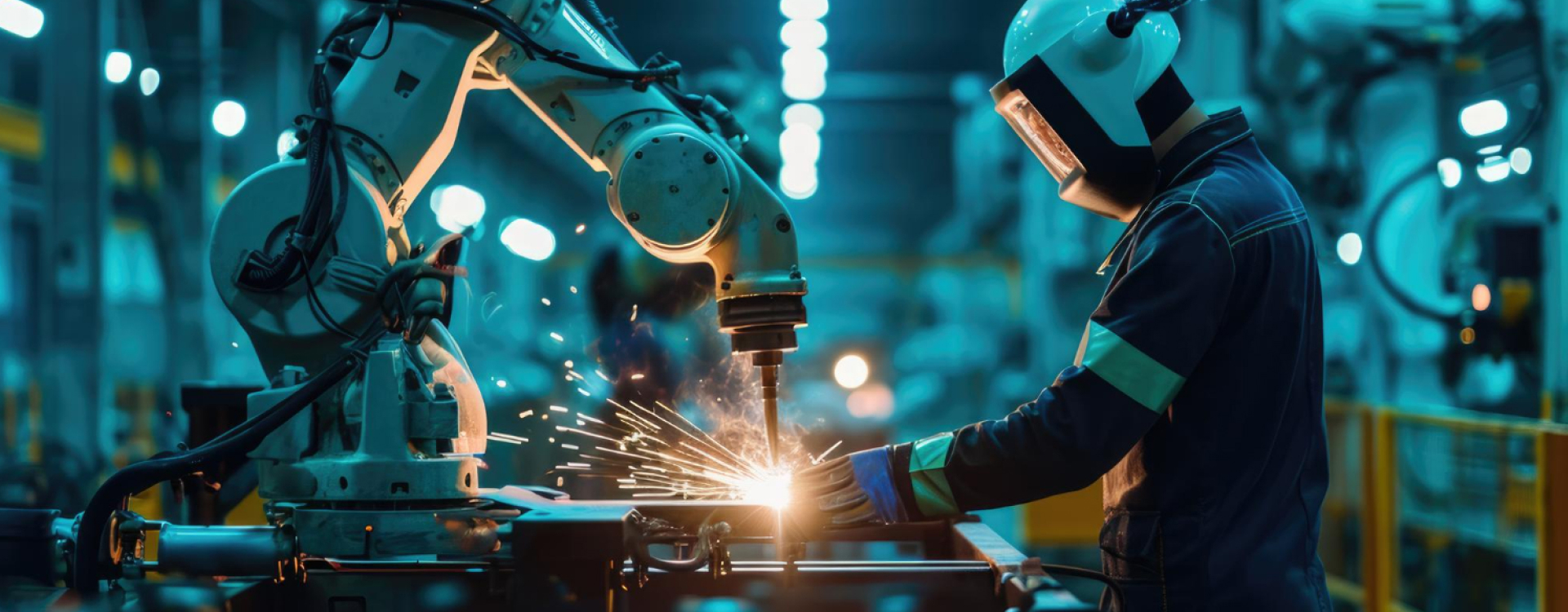
Victor Hugo once observed, “No power on earth can stop an idea whose time has come.” In our view, India-based manufacturing is one such idea. Indian companies are increasingly transitioning from domestic suppliers to trusted global manufacturing partners, particularly in engineered, high value-added products where quality, reliability, and execution matter far more than low-cost labour alone.
This shift is clearly reflected in the data. A decade ago, smartphone exports from India were negligible, with the entire mobile export segment was around ₹1,500 crore in FY15. By FY25, mobile phone exports—led by iPhones—had expanded more than 100-fold to approximately ₹2 lakh crore.
We believe the essential elements for building out a value creating export led business are:
- Building durable customer and channel partnerships through consistent quality, reliability, and on-time delivery.
- Investing in manufacturing excellence, across both advanced machinery and skilled human capital.
- Strategic diversification by entering new geographies, launching adjacent products with clear competitive advantages and selectively opening sites closer to the customers.
- Embedding innovation and design capabilities, enabling customization and higher value addition rather than commoditized output.
- Developing global compliance and quality systems, so products meet international regulatory, safety, and ESG standards from the early stages.
BSE India
Today, India accounts for nearly 35% of smartphone imports into the United States, underscoring its growing relevance in global supply chains.
Lorem ipsum dolor sit amet consectetur. Eget tempus eget nulla mattis ultricies sapien nec eu potenti.

Shilchar Technologies:
Targeting the export opportunity
Shilchar Technologies (Shilchar) is one of the leading manufacturer of power and distribution transformers with nearly four decades of operating history. While the company began as a domestically focused transformer manufacturer, it has steadily evolved into an export-oriented player, supplying to 25+ countries across five continents. International markets now account for approximately 43% of revenues, reflecting global competitiveness of product and a long-term commitment to building an export-led business.
Apple’s iPhone Exports from India Cross ₹2 Tn Mark in 2025, a First-Ever Milestone – Outlook Business
US Tariff Rates
Building Durable
Customer Partnerships
Shilchar operates a made-to-order manufacturing model, specialising in customised transformers designed to meet specific customer requirements. This approach has enabled the company to build long-standing relationships with utilities, EPC (Engineering, Procurement, and Construction) players, and industrial customers across domestic and international markets. Repeat orders and a diversified customer base across geographies underscore the trust Shilchar has earned through consistent quality and delivery.
Investing in
Manufacturing Excellence
A key pillar of Shilchar’s export success has been sustained investment in manufacturing infrastructure and engineering talent. The company’s flagship Gavasad facility is equipped with advanced testing laboratories, in-house design and engineering capabilities, and NABL-accredited quality systems. Capacity expansions at Gavasad—scaling from 4,000 MVA (Mega Volt-Ampere) in 2018 to 14,000 MVA by FY27—are being funded largely through internal accruals, keeping the balance sheet debt-free and reinforcing capital discipline.
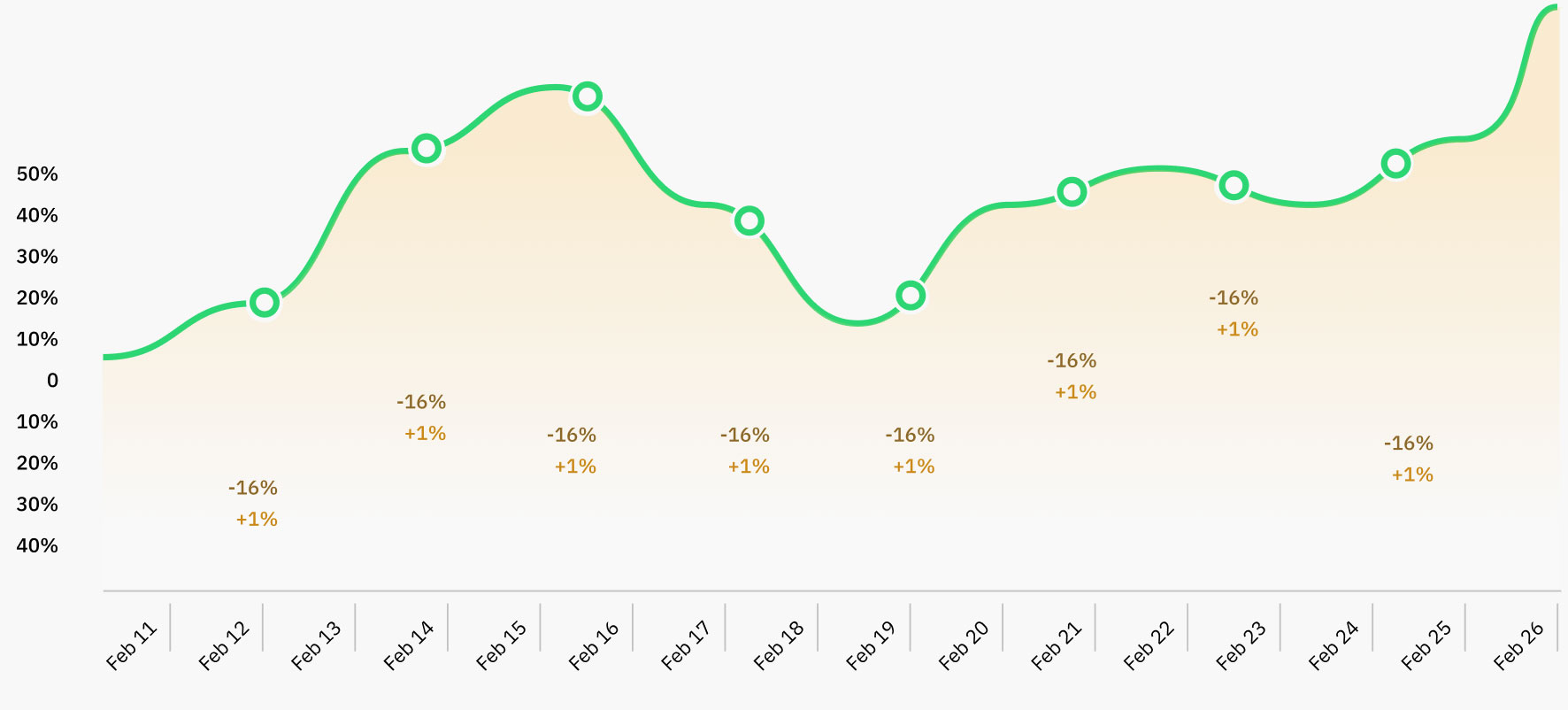
Rolling 365 Days MSCI India OPF/(UPF)* to MSCI Emerging Markets (EM)
Strategic Product and
Market Diversification
Over time, Shilchar has broadened its product portfolio across power transformers, distribution transformers, renewable-linked transformers (solar, wind, hydro), specialised industrial transformers, and higher-KVA (Kilovolt-Ampere) transformers. This diversification has expanded the company’s addressable market while reducing dependence on any single end-use segment.
Importantly, this strategy has also supported industry-leading profitability. A higher share of customised products and export revenues — which typically carry superior margins compared to standard domestic offerings — has contributed to Shilchar’s strong margin profile.
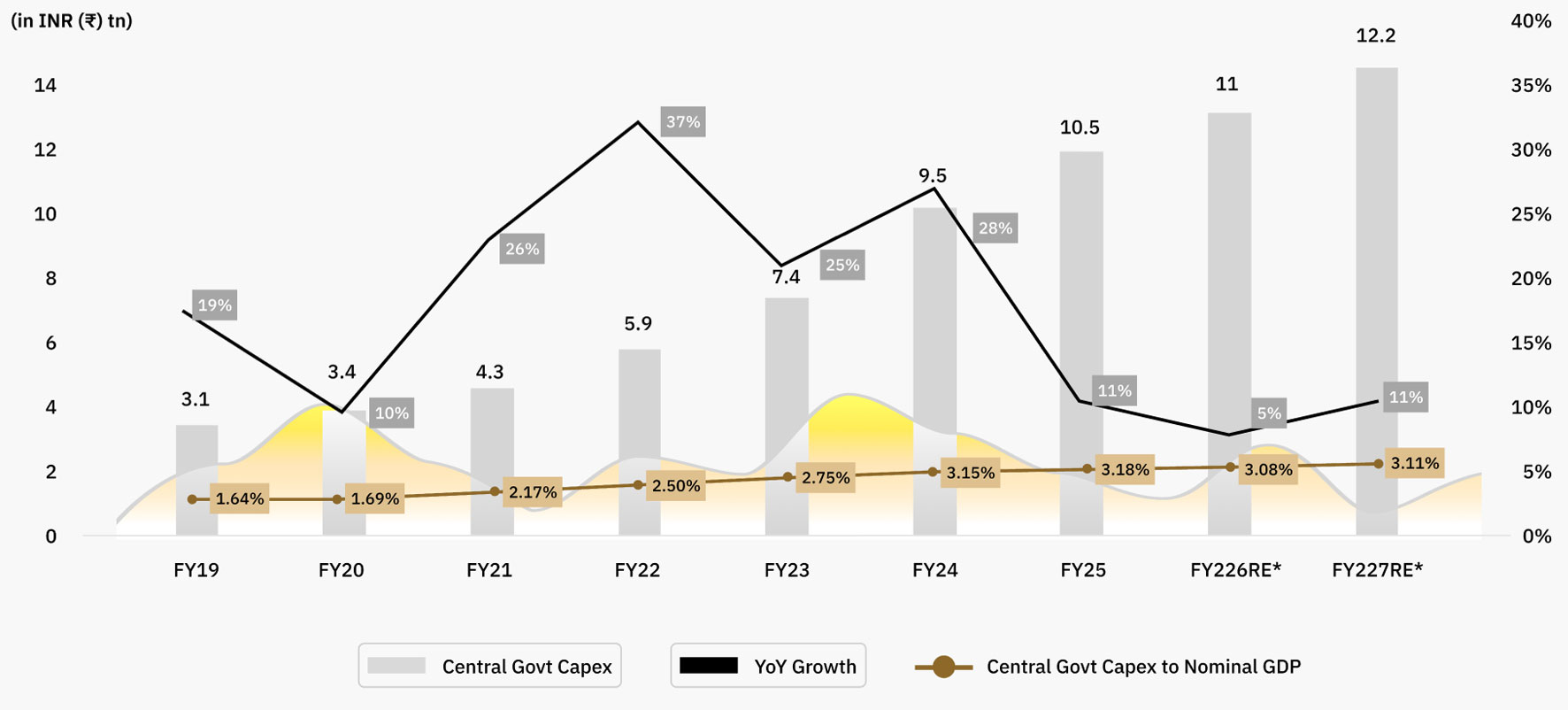
Capex Trends
| Particulars | FY24 | FY25 | FY26RE | FY26BE | YoY Increase* |
|---|---|---|---|---|---|
| Roads | 2,639 | 2,853 | 2,721 | 2,942 | 8% |
| Railways | 2,639 | 2,853 | 2,721 | 2,942 | 8% |
| Defence | 2,639 | 2,853 | 2,721 | 2,942 | 8% |
| Capex Loans to State | 2,639 | 2,853 | 2,721 | 2,942 | 8% |
| Metros | 2,639 | 2,853 | 2,721 | 2,942 | 8% |
| Others | 2,639 | 2,853 | 2,721 | 2,942 | 8% |
| Total | 9,485 | 10,520 | 10,958 | 12,218 | 11% |

Capex Allocation (INR₹ - Bn)
| Effective date | Instrument/Transaction | OLD STT Rate | New STT Rate | Change in STT | Growth* in ATTO Options After STT Hike |
Growth* in ATTO After STT Hike |
|---|---|---|---|---|---|---|
| 01 Apr 23 | Futures (Sale) | 0.0100% | 0.0125% | 0.0025% | 32.7% | 15.3% |
| 01 Apr 23 | Options (Sale on premium) | 0.0100% | 0.0125% | 0.0025% | 32.7% | 15.3% |
| 01 Oct 24** | Futures (Sale) | 0.0100% | 0.0125% | 0.0025% | 32.7% | 15.3% |
| 01 Oct 24** | Options (Sale on premium) | 0.0100% | 0.0125% | 0.0025% | 32.7% | 15.3% |
| 01 Apr 26 | Futures (Sale) | 0.0100% | 0.0125% | 0.0025% | - | - |
| 01 Apr 26 | Options (Sale on premium) | 0.0100% | 0.0125% | 0.0025% | - | - |
| 01 Apr 26 | Options (Exercise - intrinsic value) | 0.0100% | 0.0125% | 0.0025% | - | - |
Conclusion:
When evaluating manufacturing companies based in India, investors must assess not only their domestic positioning but also their ability to compete and scale in global export markets. In our view, strong engineering expertise, cost-effective manufacturing, and the ability to scale capacity in a phased and disciplined manner are critical drivers of long-term returns.
Exposure to exports, alongside domestic demand, can also acts as an important risk buffer, helping cushion the impact of mitigate adverse scenarios such as tariffs, trade disruptions, or geopolitical conflicts. As India’s manufacturing ecosystem matures, companies that combine technical depth with execution discipline are better positioned to emerge as enduring global partners.
Fund Manager Disclosure:
- The fund manager, relative or associate may have financial interest in the subject company
- The fund manager, relative, associate or Alchemy, may have an actual or beneficial ownership of 1% or more or long/ short positions in the subject security(ies) for himself or for the clients.
- The fund manager or associate may have received compensation or other benefit in the subject security(ies).
- The discussions shall not be relied upon as advisory or decisions to buy or sell any securities.
Disclaimer:
- ^These are investment ideas and there is no assurance that these will form part of client’s portfolio.
- This blog is for informational purposes only and should not be considered as an offer or solicitation to buy or sell any securities or make any investments. We recommend readers to take independent advice before taking any investment decisions.
Please refer to our Disclaimer and Disclosures for more details.






Take The
Next Step
Explore how Alpha 100 can fit into your long-term allocation framework.
